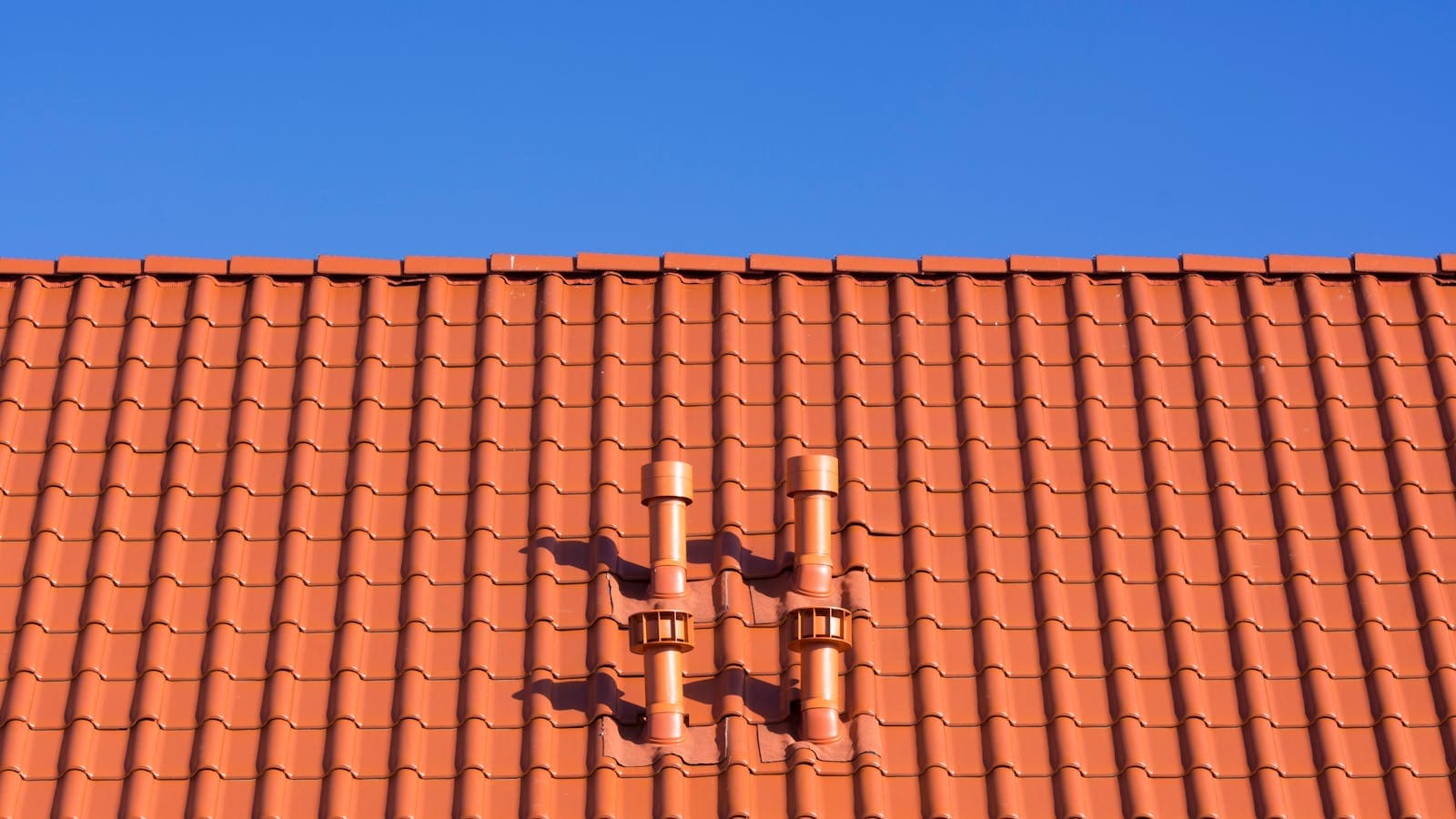
Most homeowners never think about their attic ventilation, but it has a direct impact on how long your roof lasts. Poor ventilation can actually void your shingle warranty, and it is one of the most common problems we see on inspections.
The basics.
Your attic needs a balanced system: intake ventilation at the bottom (soffits) and exhaust ventilation at the top (ridge vent, turbines, or air hawks). Air comes in through the soffits, moves up along the underside of the roof deck, and exits at the ridge. This keeps the attic close to outside temperature, which is what you want.
Why it matters in winter.
A warm attic melts snow on the roof unevenly. That creates ice dams at the eaves. Proper ventilation keeps the roof deck cold so snow melts slowly and evenly, or does not melt at all until the weather warms up naturally.
Why it matters in summer.
A poorly ventilated attic can hit 65 degrees Celsius on a hot day. That heat bakes your shingles from underneath, accelerating granule loss and shortening the life of your roof. It also radiates down into your living space and makes your air conditioning work harder.
Signs of poor ventilation.
Rust on metal components in the attic. Mould or dark staining on the underside of the roof deck. Ice dams every winter. Shingles that are aging faster than they should. Paint peeling on your fascia or soffits.
The fix.
We assess ventilation on every inspection and every re-roof. Sometimes it is as simple as clearing blocked soffit vents. Sometimes we need to add ridge vent or replace inadequate exhaust vents. It is one of the most cost-effective things you can do for the life of your roof.