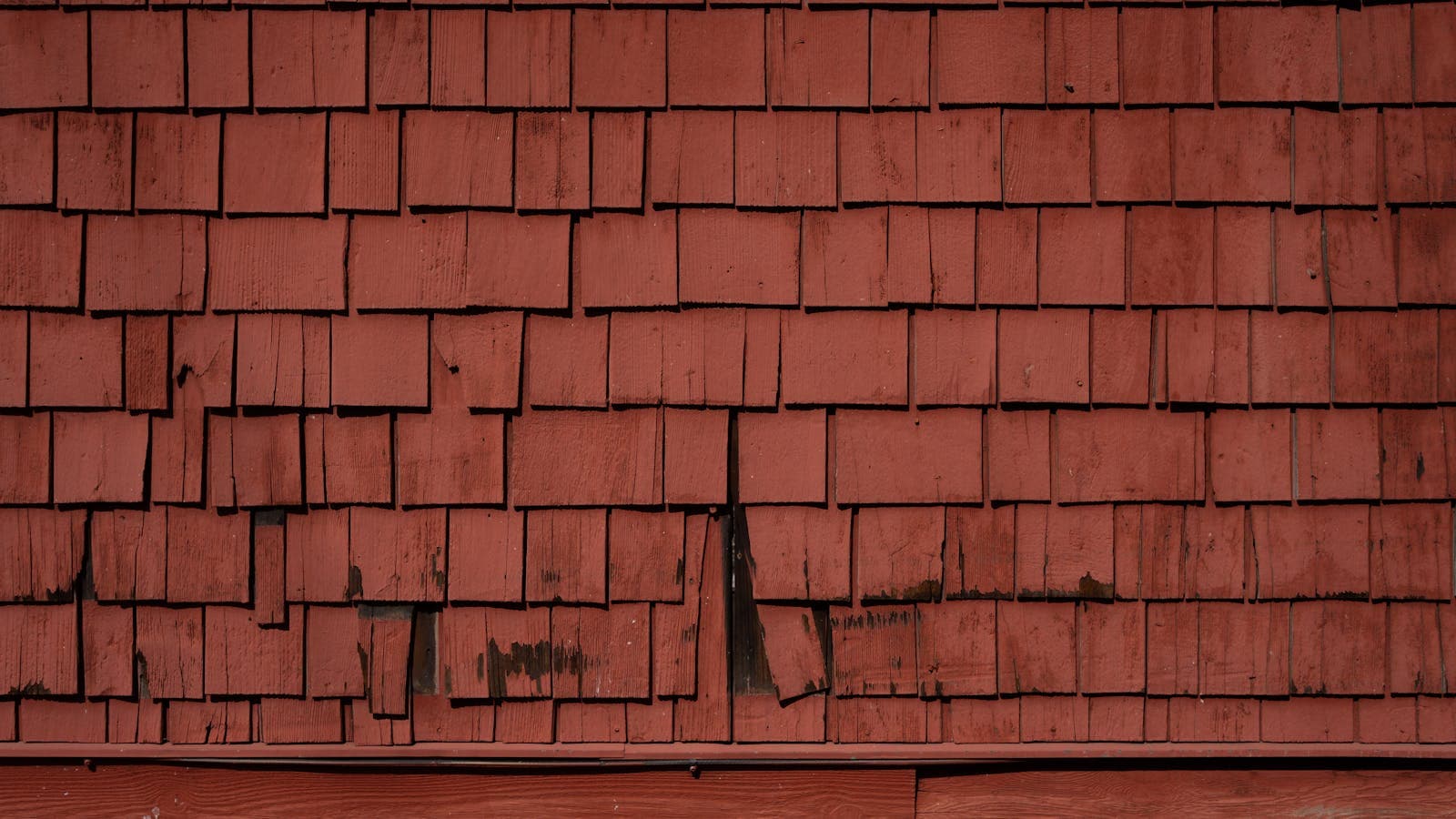
Most people never think about their roof until water is dripping through the ceiling. By that point, you are dealing with drywall damage, insulation problems, and a much bigger bill than if you had caught it earlier.
A few things to check. Grab a pair of binoculars and take a look from the ground. Do not walk on the roof. It is dangerous and you can actually damage shingles by stepping on them.
Granule loss.
Check your downspouts and gutters after a rain. If you are seeing a lot of dark, sandy granules collecting in there, your shingles are wearing out. Some granule loss is normal on a new roof, but on an older one, it means the protective coating is going.
Curling and cracking.
Shingles should lie flat. If the edges are curling up or you can see visible cracks, the material is failing. This usually happens uniformly across the whole roof, which means spot repairs are not going to cut it.
Age.
If your roof has standard three-tab shingles and it is over 20 years old, start planning for a replacement. Even if it looks okay from the ground, the material is past its rated life. Higher-grade architectural shingles can go longer, but in our climate, take the manufacturer rating with a grain of salt.
Attic signs.
Go into your attic with a flashlight on a sunny day. If you see daylight coming through the roof boards, or dark spots and streaks on the underside of the decking, you have moisture getting in.
If you are seeing two or more of these signs, call us for a proper inspection. We will give you an honest assessment and tell you how much life is actually left.