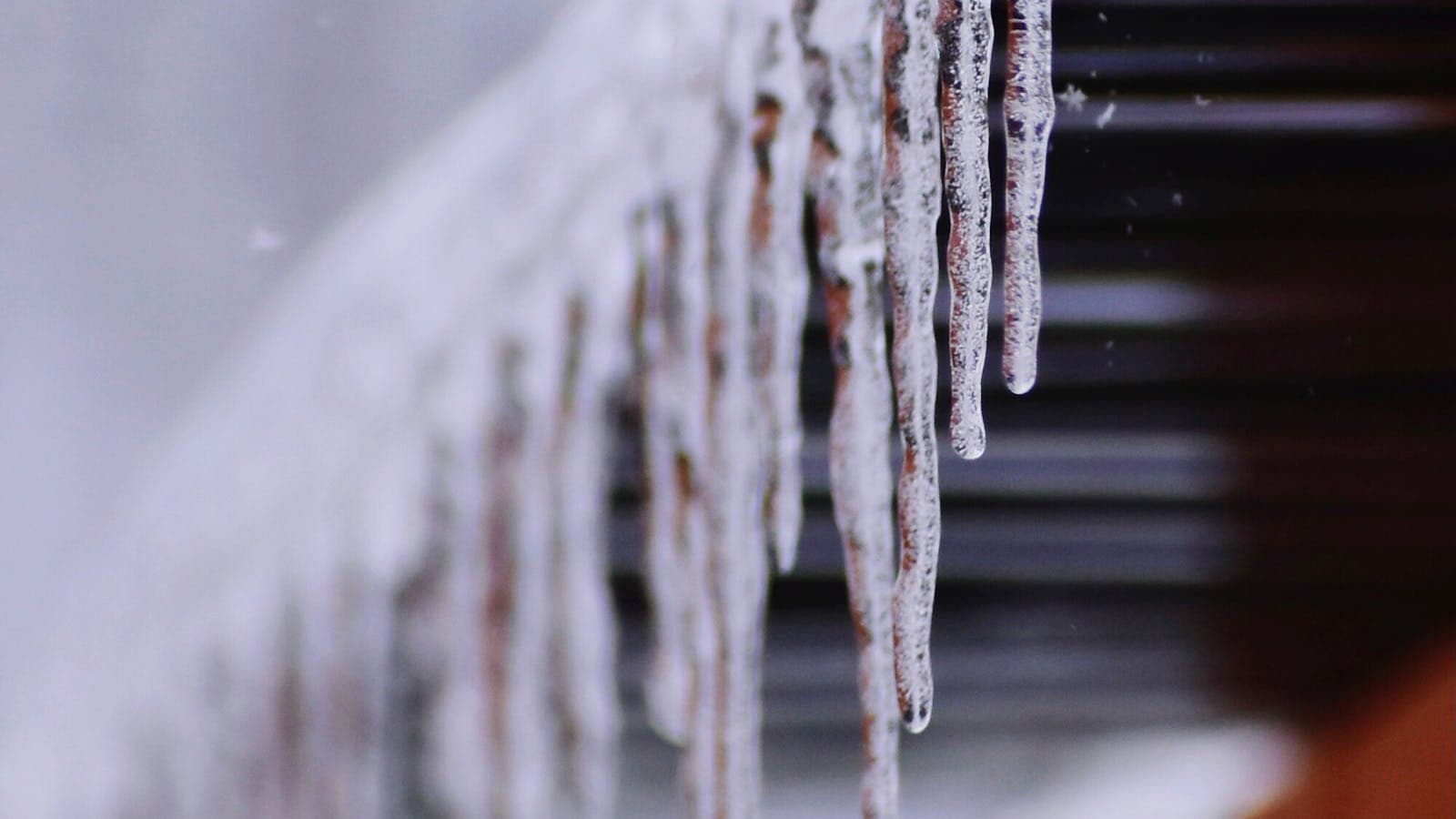
Every winter we get calls from homeowners who have water dripping inside the house, usually along the exterior walls or near the eaves. The culprit is almost always an ice dam, and understanding how they form is the first step to stopping them.
How an ice dam forms.
Heat from your attic warms the upper part of your roof. Snow sitting on the roof melts and runs down toward the eaves. The eaves are colder because they hang past the heated part of your house. The water refreezes at the eaves and starts building up a ridge of ice. Now the melting water behind that ridge has nowhere to go, so it backs up underneath your shingles and into your home.
Why ventilation matters.
The root cause is usually poor attic ventilation or insufficient insulation. If your attic stays too warm, you are going to have problems. Proper intake ventilation through the soffits and exhaust ventilation through a ridge vent keeps the roof deck cold and uniform, so snow melts evenly or not at all.
Ice and water shield.
This is a self-adhesive membrane that goes under your shingles at the eaves, in valleys, and around penetrations like chimneys and skylights. It creates a watertight seal that stops water from getting through even if it does back up behind an ice dam. Every roof we install includes proper ice and water shield coverage.
What you can do right now.
If you are dealing with ice dams this winter, do not hack at them with a pick or hammer. You will damage your shingles and possibly hurt yourself. A roof rake can help you pull snow off the lower section of the roof from the ground. For a long-term fix, talk to us about your attic ventilation and insulation.